

Introduction: A Nation of Spinners
For much of its early Test history, India was celebrated for its artistry in spin. From the 1950s through the 1970s, names like B.S. Chandrasekhar, Bishan Singh Bedi, Erapalli Prasanna, and Srinivas Venkataraghavan formed a legendary spin quartet that carried Indian bowling across conditions. Their guile on turning tracks became India’s signature style.
Fast bowling, on the other hand, was seen as a supporting role. Pioneers like Amar Singh and Mohammad Nissar in the 1930s had shown glimpses of pace, but by the 1970s, India’s seam attack was more about filling the overs until the spinners took charge. The pace was just in the backseat completing the overs when spin was at the forefront.
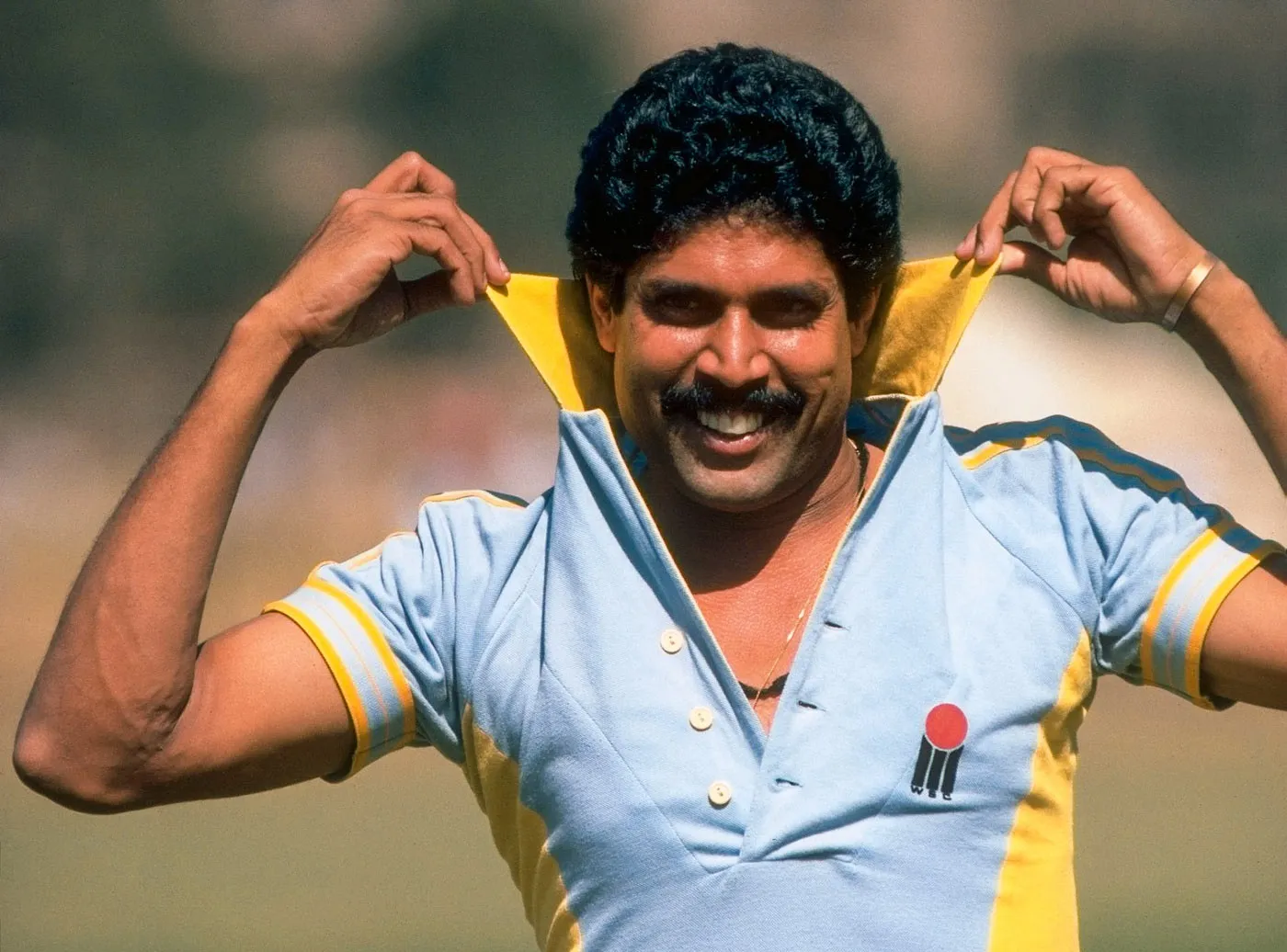
Now, Think about that for a moment. The record for the most wickets by an Indian pacer in an entire career was 74 wickets and a new young 20 year old player who just debuted in the international scene picks 74 wickets too… but there’s a catch, he did not take those over his whole career but in just 12 months. This is the story on the Hariyana hurricane.
The statistics tell the story. At the time of Kapil Dev’s debut in October 1978, the highest career tally for any Indian fast bowler was just 74 wickets. That was the ceiling. In a land of spin, pace had never been trusted to lead.
But all of that was about to change.
1979: A Breakthrough Year
Kapil Dev arrived as a breath of fresh air raw, fearless, and with a hunger that Indian cricket hadn’t seen in a fast bowler.
Just a year into his career, in 1979, he equaled that long-standing mark of 74 wickets. Not across a career, but in a single calendar year. An unbelievable achievement nobody thought was even possible.
Kapil’s bowling that year was all about stamina and spirit. He could bowl long spells, generating outswing at pace, troubling top-order batsmen who had rarely faced sustained hostility from an Indian bowler. He wasn’t just filling in overs before the spinners arrived he was taking the fight to the opposition. He was fighting the battle at the forefront by himself.
This was more than statistics. It was a statement.
The Symbolism Behind the Numbers
Why does Kapil Dev’s 74 wickets in 1979 matter so much? Because it represented a cultural shift.
Until then, Indian cricket didn’t imagine fast bowlers as match-winners. Kapil broke that mindset. He showed that India could produce pacers who weren’t just supporting acts, but leaders of the attack. He proved that fast bowlers too can lead the attack and pick wickets, not just depending on the spinners.
He was also a complete package an all-rounder who could bat aggressively, lift the morale of the team, and inspire confidence. But his bowling in those early years was revolutionary. It gave India something it hadn’t had before: belief in pace unit.
Building the Legacy of Indian Fast Bowling
Kapil’s impact went far beyond his personal records. By the time he retired, he had taken 434 Test wickets, becoming the highest wicket-taker in the world. But his true legacy lay in what came after.
Every generation of Indian fast bowlers since the 1980s has walked the path Kapil carved:
Javagal Srinath became the face of Indian pace in the 1990s, carrying forward Kapil’s work ethic.
Zaheer Khan brought skill, control, and leadership to the 2000s, taking India to overseas wins.
Ishant Sharma, with his tireless spells in England and Australia, became the workhorse of the 2010s.
Bhubaneswar Kumar, Mohammed Shami and Umesh Yadav added firepower with their reverse swing and speed.
And finally, Jasprit Bumrah, India’s modern-day pace spearhead, stands as the symbol of how far the journey has come.
Today, there’s a faith in the fast bowlers that was earlier unseen. Without Kapil Dev’s 1979, this chain might never have begun.
Indian Cricket Before and After Kapil
Before Kapil Dev, Indian bowling was almost synonymous with spin. Matches overseas often saw Indian pacers reduced to token figures, waiting for spinners to take charge.
After Kapil, things changed. Even in conditions where spin wasn’t dominant, India had a weapon. His presence made Indian teams more balanced, more threatening, and more respected.
In a way, Kapil’s 1979 season was the bridge that connected India’s past reliance on spin to its future embrace of pace.
Beyond the Numbers: Inspiration for Generations
The 74 wickets in 1979 are more than a record, they are a symbol of ambition. They showed that boundaries set by history can be broken in a single season if someone dares to rewrite the script and challenge the norms.
For young cricketers in the late 70s and 80s, Kapil Dev became a role model. He wasn’t just a bowler; he was proof that Indian cricket could stand tall against the world’s best in their own game.
Today, when we see Bumrah bowling amazing spells with precision at Lord’s or Shami dismantling batting lineups in World Cups, it all traces back to that spark Kapil lit in 1979.
Conclusion: The Year That Changed Everything
Kapil Dev’s debut wasn’t just the arrival of a great all-rounder. It was the start of a new chapter in Indian cricket. His 74 wickets in 1979 weren’t just numbers on a scorecard, they were the moment Indian fast bowling announced itself to the world.
From that year forward, Indian cricket stopped being just a spin nation. It began its journey towards becoming a team with a complete bowling attack, capable of winning anywhere in any condition, not bound by the lack of options.
Kapil didn’t just bowl fast. He bowled India into a new era.


