

Some victories are remembered for the margin. Others are remembered for the way the game seemed to move steadily in one direction.
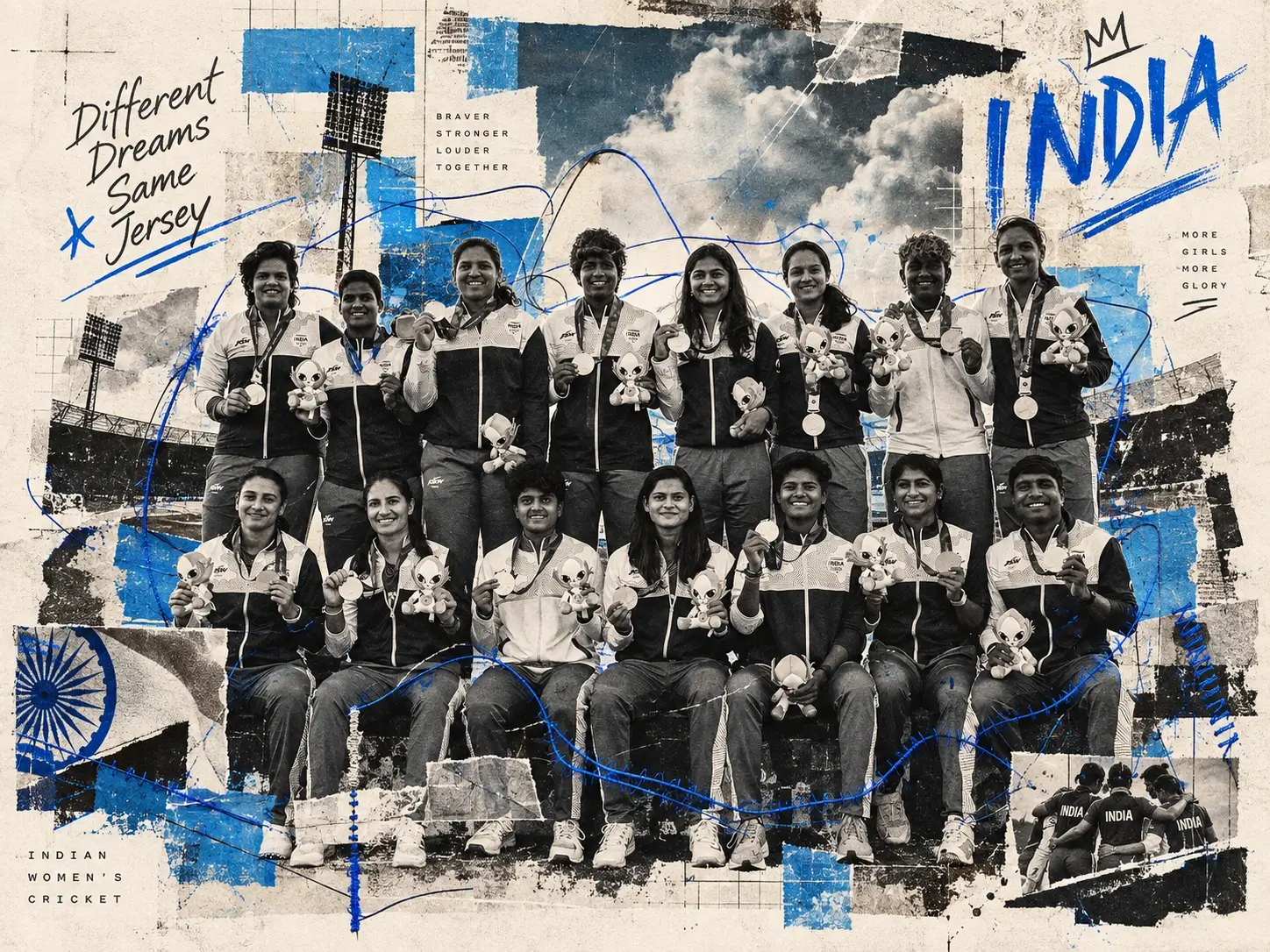
India’s women’s cricket team produced the latter in Nisshin on September 22, defeating Sri Lanka by 147 runs in the Asian Games final to retain the gold medal they had won at the previous edition. It was a comprehensive performance, but more importantly, it was one built across every phase of the game.
India’s innings began with the kind of certainty that has become familiar in their recent white-ball cricket. Smriti Mandhana and Shafali Verma put on 99 for the opening wicket, taking the initiative away from Sri Lanka before the final had properly settled. Mandhana was particularly fluent, scoring 79 from 45 deliveries, while Shafali fell for 48, just two runs short of a half-century. This innings also took her past 11,000 international runs, making her the first woman to reach the milestone.
The early momentum gave India the platform to finish strongly. Richa Ghosh then added another burst of aggression, scoring 49 from only 22 balls, as India reached 216 for three from their 20 overs. India’s 216/3 was the highest total of the women’s cricket tournament at the Asian Games, but the manner in which it was constructed mattered just as much. India had not relied on one extended passage of dominance. They had kept the pressure moving from one batter to the next.
Sri Lanka’s chase never gained momentum, and they were bowled out for 69 in 15.4 overs.
Shafali made an impact with the ball as well, taking two early wickets before Deepti Sharma removed Chamari Athapaththu, who had managed 29 from 21 balls. India continued to take wickets at regular intervals. Shreyanka Patil and Sree Charani struck through the middle order, while Deepti eventually finished with three wickets. Shafali, Shreyanka, and Charani took two each, as Sri Lanka were bowled out inside 16 overs.
The result was India’s second consecutive women’s cricket gold at the Asian Games. It also arrived only days after another significant tournament victory, with India having defeated Sri Lanka by 72 runs in the Women’s Asia Cup final on September 13 to claim an eighth title in the competition.
There is a certain continuity to the two victories. The names at the center of India’s performances may change from one match to another, but the underlying quality has remained consistent. Against Sri Lanka in Nisshin, Mandhana provided the foundation, Ghosh supplied the late acceleration, and the bowlers ensured that the chase never became a contest.
That is perhaps the more lasting image from this Asian Games campaign. The gold did not belong to one performance or one player. It came from a side that repeatedly found someone to take responsibility when the game demanded it.
India’s record 216/3 and the 147-run margin will remain in the record books. But for Indian women’s cricket, this victory adds something more valuable: another major tournament finished with a medal, another final controlled from beginning to end, and another chapter in a story that continues to grow.


