

The first question was not whether Rishabh Pant would walk again. It was whether he would play cricket again.
When Pant was transferred to a Mumbai hospital after the car crash near Delhi that nearly ended his life, that was the question he asked Dr Dinshaw Pardiwala. His mother had a more immediate concern: would her son ever be able to walk again? The difference between those two questions says something about Pant even before the rehabilitation began. For him, the road back was never simply about getting healthy. Cricket was already somewhere at the other end of it.
On December 30, 2022, Pant was driving from Delhi towards his hometown, Roorkee, when his car crashed into a divider. The accident left him with a dislocated right knee, an injured ankle, extensive skin loss and other injuries. The damage to his knee was particularly serious. The ligaments had been torn, and there was a risk of damage to the blood vessels and nerves. Pardiwala later explained that a blood-vessel injury in such a case could have put the leg itself at risk. Pant had been extremely fortunate to survive with his limb intact.
The first major step was surgery, but there was no shortcut after that. On January 6, 2023, Pant underwent a four-hour operation in which three ligaments in his right knee were reconstructed and his tendons and meniscus were repaired. What followed was considerably less dramatic than the accident, but arguably harder to sustain. For several weeks, he could not even brush his teeth. His hands were badly swollen and movement was difficult. Eventually, he progressed from needing help to drink water to walking without crutches four months later. Even then, playing professional cricket was far from guaranteed.
That uncertainty was important. A knee reconstruction of this severity is normally about getting someone back to ordinary life first. Walking comfortably, restoring strength, recovering range of motion and rebuilding stability are major milestones on their own. Competitive cricket comes much later, if it comes at all. Pant’s doctors therefore broke the recovery into steps rather than promising an immediate return. Pardiwala estimated that getting back to competitive cricket could take around 18 months. Pant, predictably, wanted to know how he could make that timeline shorter.
For most of 2023, his world became the National Cricket Academy in Bengaluru. There were no match days to prepare for, no dressing-room noise, no flights to catch and no scorecard to think about. There was rehabilitation. The same exercises had to be repeated, often without any visible sign that the work was moving him closer to a comeback. Pant later described recovery as boring, irritating and frustrating. He also understood that there was no way around it. You did the same things every day because eventually those small improvements had to add up.
There were setbacks of a different kind too. Pant was watching the game from the outside, something that did not come naturally to a player used to influencing matches himself. He largely stayed away from cricket, apart from following the 2023 Ashes, and admitted that watching the IPL could leave him stressed because he was constantly thinking about what he would have done differently if he were playing. When he eventually picked up a bat and put on his keeping gloves during rehabilitation, he was reportedly scolded by those looking after his recovery. He did it anyway. The urge to play had returned before the body was fully ready for it.
By early 2024, the possibility that had once been described as a third miracle was beginning to look real. Pant was medically cleared to return to competitive cricket after 14 months away. He came back with Delhi Capitals in the IPL, his first significant test in front of a crowd since the accident. It was not simply about scoring runs. He had to move, keep wicket, run between wickets and spend hours on the field again. The body that had spent months learning how to perform basic movements now had to withstand the demands of professional cricket.
Then came the international return. Pant was selected for India’s 2024 T20 World Cup squad, marking his return to international cricket after the December 2022 accident. In the tournament’s warm-up against Bangladesh, he scored 53 from 32 balls. A few days later, against Ireland in New York, he made 36 not out from 26 balls and hit the winning runs with a six. The numbers themselves were good. The larger significance was simpler: Rishabh Pant was back in an India shirt, doing the job he had spent more than a year trying to earn his way back to.
But even that was not the final chapter. Returning to T20 cricket was one thing. Returning to Test cricket, the format in which Pant had already built some of his most important innings, was another. In September 2024, he returned to India’s Test squad for the first time since the accident. In the Chennai Test against Bangladesh, he made his Test comeback and then scored a century in the second innings. It was his sixth Test hundred, and it came after 21 months away from the format. The return was no longer theoretical. He had gone from wondering whether he would ever play again to standing behind the stumps for India in a Test match again.
That is where Not Out comes from.
Not from the accident itself. Not from the surgeries. Not even from the final scorecard. It comes from everything in between. The long stretch when cricket was reduced to rehabilitation exercises. The days when brushing his teeth was an achievement. The frustration of watching matches instead of playing them. The impatience with timelines. The uncertainty over whether the knee would ever be good enough. And then, slowly, the return: first to normal movement, then to training, then to competitive cricket, then to India, and finally back to Test cricket.
In cricket, not out is a simple entry on a scorecard. It means the innings is still unfinished. Pant’s recovery gave those two words another context. The story had not ended on December 30, 2022. It had simply moved into a different kind of innings, one measured not in runs and overs, but in steps, sessions, setbacks and days.
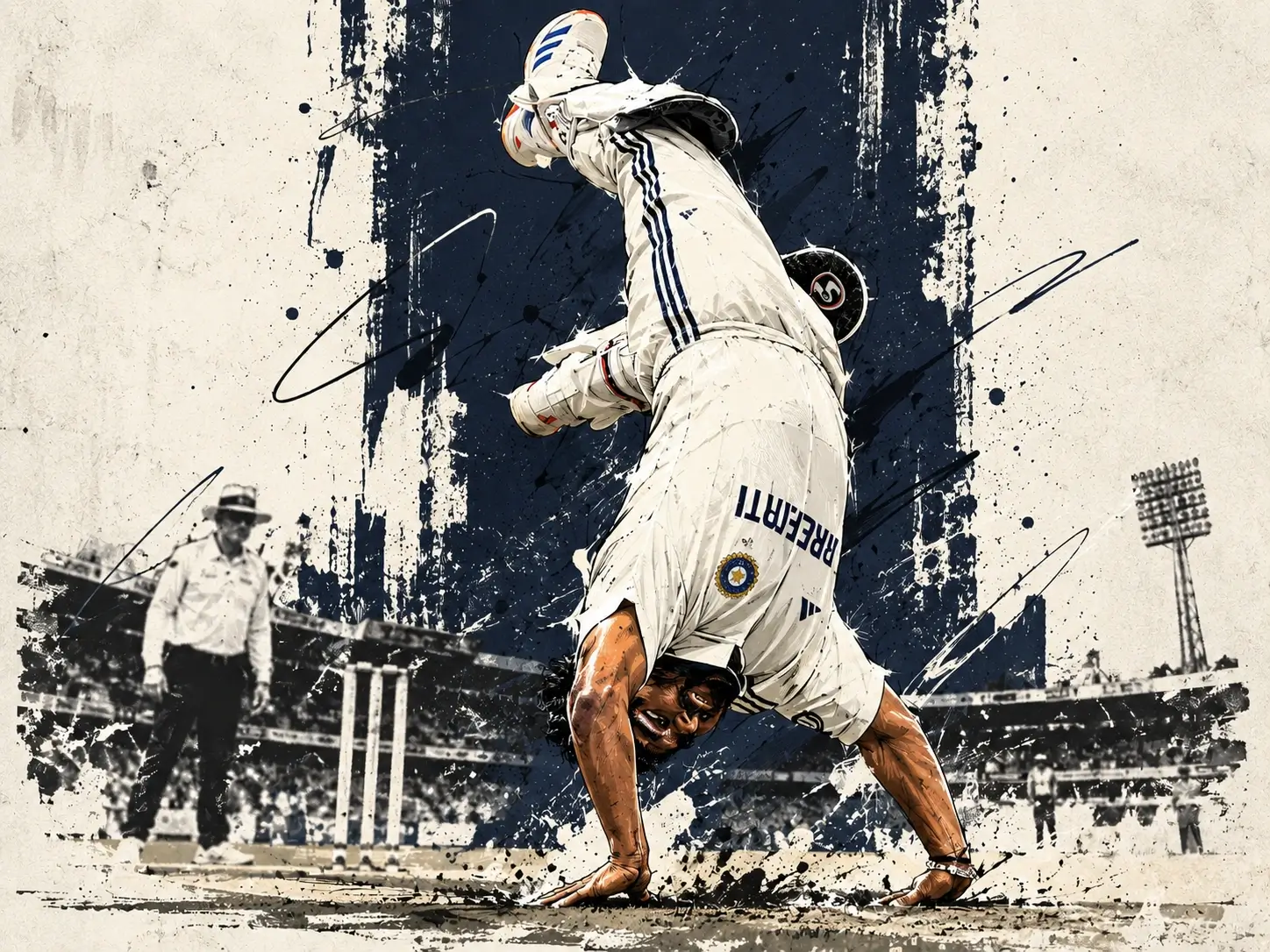
The Not Out design is built around that idea. A player in motion, caught somewhere between impact and balance, between falling and finding his feet again. It is a reminder of a period that Indian cricket followers watched from a distance, when the biggest question was not how many runs Pant would score next, but whether there would be a next at all.
There eventually was.
And perhaps that is what makes the words worth carrying. Not Out is not a celebration of one innings. It is a record of an unfinished one.


