

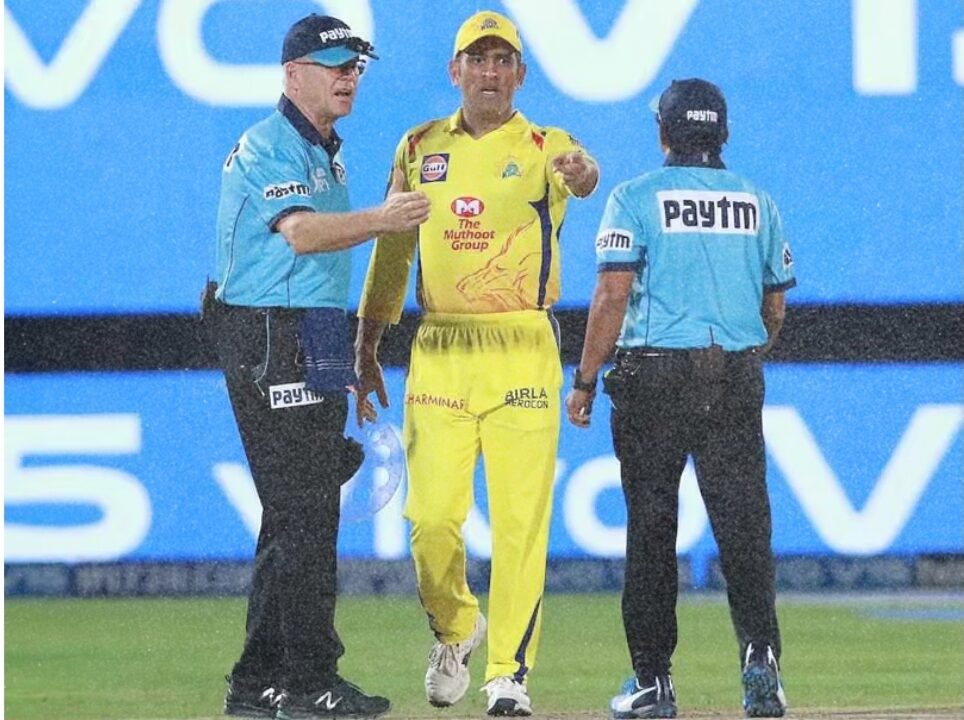
For over a decade, Mahendra Singh Dhoni has been the face of calmness in Indian cricket. Be it lifting trophies under pressure, guiding youngsters, or facing the press in defeat with silence. Dhoni’s composure became mythical, the reason the world fondly named him Captain Cool.
But even the calmest seas have their storms. Beneath that still face lies a volcano that rarely erupts, and when it does, it shakes everyone around. Here are eight unforgettable moments when even Dhoni’s patience broke, and the world saw the man behind the mask.
1. The Gambhir Misfield (CB Series 2012)
In the 2012 Commonwealth Bank Series in Australia, Dhoni’s calm exterior slipped for a fleeting second. During a tight run chase, Gautam Gambhir misfielded, costing India a few crucial runs. What followed was rare: Dhoni turned sharply, glaring and shouting in visible irritation.
For teammates used to his quiet nods and minimal words, it was shocking. The captain, who usually solved chaos with silence, had finally spoken through anger. It showed that even Dhoni, who preaches control, had limits when commitment faltered.
2. The Umpire Showdown (CB Series, Adelaide 2012)
Later in that same series, during a tense match against Australia, Dhoni confronted umpire Billy Bowden over a dubious no-ball decision. He walked up, looked him in the eye, and said words that clearly carried frustration. For a man who almost never questioned officials, this was uncharacteristic.
That day Captain Cool turned human. He wasn’t fighting for himself; he was fighting for fairness. His anger had purpose.
3. The Infamous Jadeja Moment (IPL 2019 vs Rajasthan Royals)
Perhaps the most famous meltdown of Dhoni’s career came in Jaipur, 2019. Chasing a tight total for Chennai Super Kings, a no-ball was first signaled and then withdrawn. Dhoni, sitting in the dugout, stormed onto the field mid-over, something unheard of, unseen yet.
Eyes wide with disbelief, with a sharp voice, he confronted umpire Ulhas Gandhe. The usually expressionless Dhoni looked furious, his calmness replaced by sheer disbelief.
The world gasped, “Did Dhoni just lose his cool?”
Yes, he did. But it wasn’t vanity; it was justice he sought. Even legends, when betrayed by inconsistency, demand answers.
4. The Heated Exchange with Mustafizur Rahman (Ind vs Ban, 2015)
During India’s tour of Bangladesh, young pacer Mustafizur Rahman repeatedly stepped into Dhoni’s running line, almost colliding with him. On the third attempt, Dhoni barged his shoulder into the bowler and walked away, visibly annoyed.
It wasn’t aggression; it was a warning. The captain who tolerated errors had no patience for disrespect. In that shoulder nudge lay a message: Do not mistake calm for weakness.
5. The Captaincy questioned (2009 Press Conference)
After India’s early exit from the 2009 T20 World Cup, Dhoni faced a swarm of journalists. The tone of the questions turned mocking, asking about his captaincy, his selections, and his leadership. For once, his words carried an edge.
“I don’t care what others think. My team knows what I stand for,” he said, with steady eyes and a tight jaw.
That subtle sharpness said everything: a man pushed to defend his principles, not his pride. It was controlled anger, the kind that burns silently but deeply.
6. The Sreesanth Outburst 2009
In the early days of the IPL, playing for Chennai Super Kings, Dhoni lost his temper at S. Sreesanth for unnecessary chatter and poor fielding discipline. Witnesses described Dhoni as “furious,” shouting orders in the dressing room. A storm few had ever seen.
He later walked out stone-faced, as if nothing had happened. But those who were there said it was the loudest they’d ever heard him.
That moment showed the weight he carried, the quiet leader who bore every mistake as his own until it became unbearable. When the weight can’t be handled, it becomes a rising volcano.
7. The Stump Mic Moment (India vs Sri Lanka, 2016)
During an ODI in Ranchi, Dhoni was caught on stump mic scolding bowler Manish Pandey in Hindi for not following his field plan: “Bowl karne ka time milta nahi hai, aur dimaag chalane lagta hai!”
The world chuckled, but his teammates knew that it wasn’t just sarcasm. It was bottled frustration spilling out in his own tongue.
That small outburst revealed the weight of expectations on the man who had to think for everyone, always. Forever being the calculative and calm one sometimes forces unreasonable expectations.
8. The Silent Fury (The Retirement Press Conference)
When Dhoni announced his Test retirement in 2014, the world didn’t see tears, but there was unmistakable fury at the system, at the noise, at the fatigue, at the questions, and at the board. His quiet announcement wasn’t surrender; it was rebellion through silence.
He walked away not because he’d lost passion, but because the constant criticism had chipped away at his peace. His “coolness” had cost him more than we’ll ever know.
That silence was his final outburst, being calm yet louder than any yell.
Why Dhoni’s Anger Hits Different
Because it’s rare.
Every time Dhoni lost his cool, it mattered. It wasn’t immaturity or ego; it was something of an emotional honesty that slipped through his aura of calm. His anger wasn’t reckless; it was righteous.
Dhoni’s wrath always had a reason. A misjudged call, a lazy effort, and a broken system. He wasn’t angry at losing. He was angry at losing discipline, losing fairness, and losing respect for the game.
In those rare moments of fury, fans saw the real Dhoni. Not the brand ambassador of calm, but the soldier within him who demanded excellence from everyone around; not the silent one, but the raw Dhoni. These moments were not just random outbursts or a show for display, but they carried more weight than that.
The Man Who Taught India How to Stay Still
What makes these moments unforgettable is not the anger itself, but how quickly he returned to stillness.
Minutes after arguing with umpires or scolding bowlers, Dhoni would be smiling again, refocused, detached. His discipline over emotion wasn’t natural; it was earned.
He showed an entire generation of cricketers that leadership isn’t about never feeling anger; it’s about mastering it. His outbursts were rare not because he lacked fire, but because he chose to use it only when it truly mattered.
The Calm Before and After the Storm
MS Dhoni remains the protagonist of self-control in Indian cricket’s story. But knowing these moments adds depth to his legendary career. It reminds us that courage is not the absence of fear but overcoming fear. Similarly, calmness isn’t the absence of anger; it’s the conquest of it.
And when even Captain Cool loses his cool, it tells us that sometimes, passion and peace must coexist. Because greatness isn’t about being unshaken; it’s about how quickly you steady yourself after the shake.
In the end, Dhoni’s fury was never destructive; instead, it was a silent momentary thunderstorm that had more impact than wrecking anger.


